| DAY 23 - GOOD KING WENCESLAS |
|
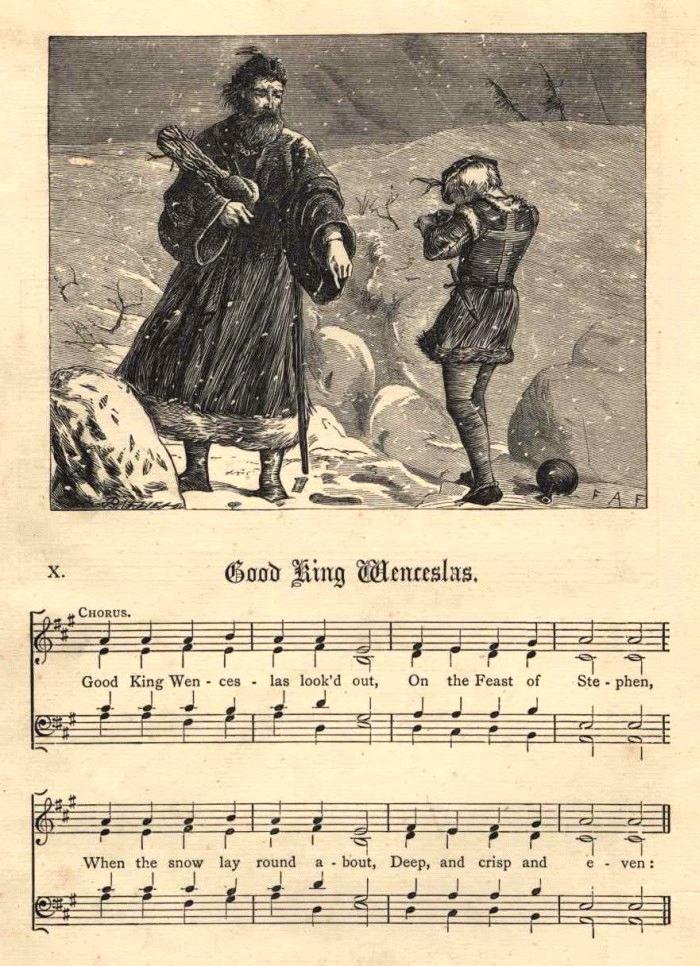
"Good King Wenceslas" was written by English hymnwriter
John Mason Neale sometime in the mid-19th century.
The tune is Scandanavian, composed by Piae Cantiones.
Here's three versions of our song:
an instrumental on Appalachian string instruments
released in '98 on A FAMILY CHRISTMAS CD;
a version by Elisabeth von Trapp of the famous family
immortalized in The Sound of Music, from her
album released in '99 - CHRISTMAS SONG;
and the amazing Paul Horn, from his PEACE ALBUM,
released in '01 on the Inside Music label.
.
|
.
Three more versions of the Good King's song:
on the left a couple of unnamed folks calling themselves
Southwest Guitar Duo, from an '06 CD on their own label - The Christmas Guitars;
in the center the Concino Children's Choir from their CD Children Sing Christmas,
released in '05 on the Time Pools label;
and on the right a version by a group called Tourist Machine,
not from an album, but a single available through Amazon.
.
|
|
.
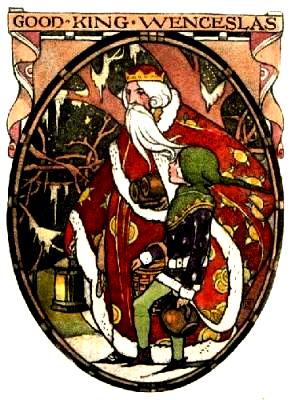
Who was King Wenceslas anyway?
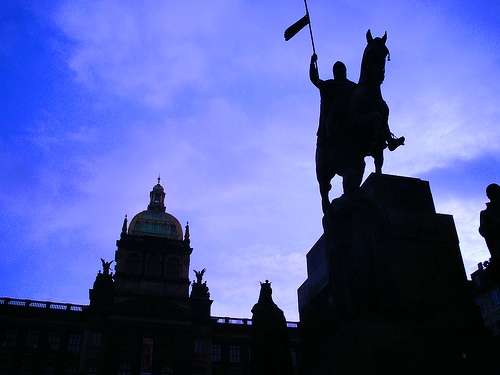
Wenceslas was the Duke of Bohemia who
was murdered in 929 AD by his wicked
younger brother, Boleslav.
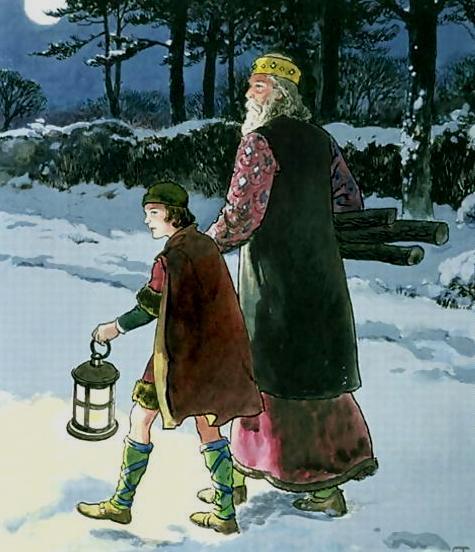
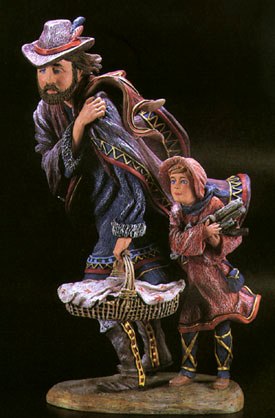
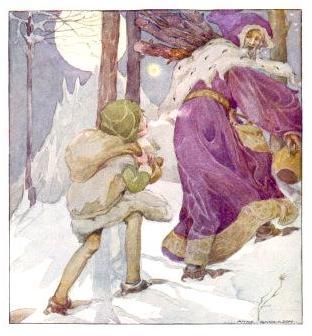
As the song indicates, he was a good, honest, and
strongly principled man. The song expresses his
high moral character in describing King Wenceslas
braving a fierce storm in order to
help feed a poor neighbour.
Wenceslas believed that his Christian faith
needed to be put into action in practical ways.
Wenceslas was brought up with a strong
Christian faith by his grandmother St. Ludmila.
Wenceslas’ own mother Drahomira, however,
joined forces with an anti-Christian group that
murdered Wenceslas’ grandmother, and
seized power in Bohemia. Two years later in 922 AD,
the evil Drahomira was deposed, and
Good King Wenceslas became the ruler.
He became Bohemia’s most famous martyr and patron saint.
His picture appeared on Bohemian coins,
and the Crown of Wenceslas became
the symbol of Czech independence.
(continued below)
.
|
|
.
Even as a young child, I remember feeling moved
as I sung this unusual carol. Why does Good King Wenceslas
have such a deep and lasting impact on its hearers?
Perhaps it is because there are so many levels of meaning
to this carol. A child may hear one thing,
an adult may hear another. I find that I can
sing it again and again, and new meaning continues
to pour forth from the carol. Recently the phrase
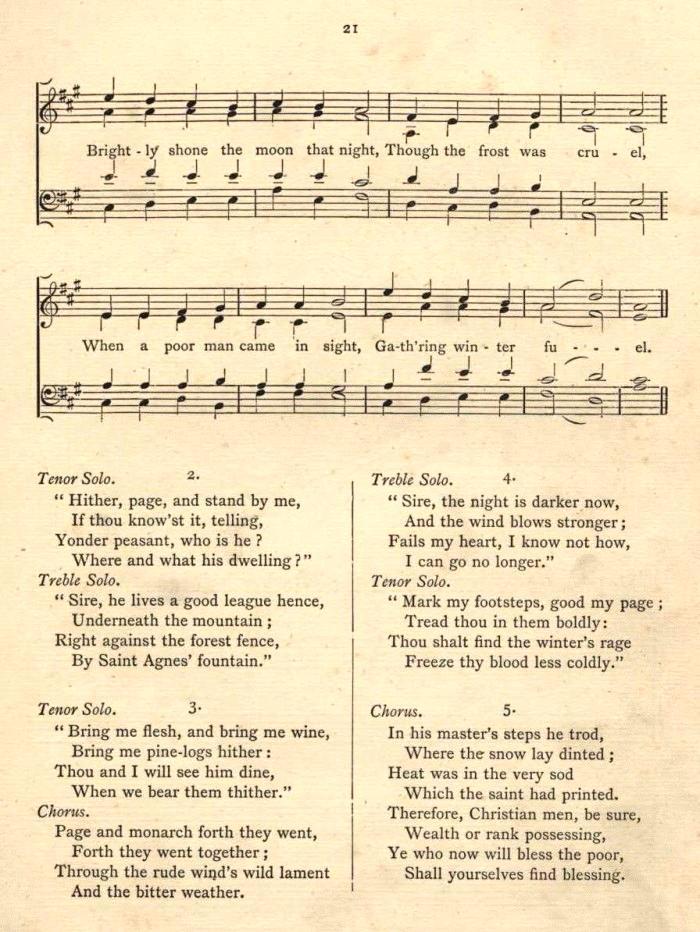
‘Fails my heart, I know not how, I can go no longer’
really spoke to me. It reminded me that sometimes
there are times in our lives when life and its stresses
seem to overwhelm us, and we feel that
‘we can go no longer.’
The response of Good King Wenceslas was most interesting.
He said: ‘Mark my footsteps, my good page,
Tread thou in them boldly: Thou shalt find the winter’s rage
freeze thy blood less coldly.’
Wenceslas reminds us that when we are all alone,
life can feel very bleak. It is at such times
that solidarity with another human being can help
‘our blood freeze less coldly’.
Wenceslas affirms that we are not alone,
and subtly points to the basic Christmas message that
Jesus our Master will never leave us in the cold.
Rev. Ed Hird, St. Simon's Anglican Church
North Vancouver, B.C.
.
|
.
A medieval Christmas celebration was not over in a day,
but continued until 6 January (the Egyptian winter solstice),
the Feast of the Epiphany on the 12th day after Christmas Day.
Epiphany celebrated the visit of the wise men, the Magi,
around whom many layers of legend accumulated as they came to be
conceptualized as three oriental kings who visited the
infant Christ at Bethlehem in Judaea.
Epiphany also symbolized the manifestation of Christ to the Gentiles.
There was no absolute standard about ending the Christmas season
with Epiphany, and many carried it through to forty days after Christmas,
the date of an ancient pagan festival on 2 February.
This is now celebrated as Candlemas,
or the Feast of the Purification of the Virgin, or alternatively as the
Presentation of the Infant Jesus in the Temple.
In one of the most elaborate processions of the year,
all parishioners came to Mass with a penny and a candle
blessed before the procession, both of which were offered to the priest
as part of the parochial duties of the faithful.
Other candles were blessed and taken away by the faithful
to be used for such things as giving comfort during thunder storms
or while sick or even dying.
Such candles were thus important for giving people
a light of solace in the face of hostile forces and stressful events.
And thus Candlemas was a closure for the long season commencing
with Advent that drew Medieval Christians to concentrate on the
miraculous gift to humanity of Christ, and the promise of salvation,
while leaving at the same time space for fun, feasting, and socializing.
Compton Reeves
Pleasures and Pastimes of Medieval England
|
|
The title of the album is Hey For Christmas, and the sub-title reads:
"Seasonal songs and carols from the Bodleian Library's Broadside Ballad collections" -
jolly Olde England type stuff, if you get my drift.
The Oxford Waits with The Mellstock Band came out with
this gem in 2000 on the Beautiful Jo label.
.
|
|
r
It is sin to despise one's neighbors;
blessed are those who help the poor.
Those who oppress the poor insult their Maker,
but those who help the poor honor him.
.
Proverbs 14:21, 31
hhh
|
|